
Burning Boats, Marathon Robots & a World Where Water Floats.
Now Serving Yummy Side Dish Of Brain Snacks.

Let’s start with a question.
Years ago, Harvard psychologist Dan Gilbert ran an experiment on a group of university students.
He put them through a black-and-white photography course. Several weeks of shooting, developing, fussing over prints in a darkroom. At the end, each student picked their two best photos and was told they could keep only one. The other would go into the university archive.
Then came the twist. The students were split into two groups.
Group #1: No options. Make your pick, hand the other over, done. No takebacks.
Group #2: Some options. Take one home, but you had up to five days to come back and swap it if you changed your mind.
The answer is in the second story of this week’s Deep Fried Thoughts. I promise it’s worth it.
Hi, I’m Garima. Welcome to Deep Fried Thoughts.
Every Thursday, I send out a small batch of articles, videos, essays and podcasts that make you think. And think deep.
If that sounds like your kind of thing, I’d love for you to subscribe.
Now let’s get to this week’s brain snacks, fresh out of the fryer.
The Toy That Ate Nokia
It is the year 2010. I am about to join Nokia, the company that sells one in every three phones on Earth.
From the outside, the crown looks secure. From the inside, I can feel it slipping. Apple, Samsung and a swarm of Chinese OEMs are circling, attacking the premium, mid-range and budget segments all at once.
Around the same time, Chris Dixon, the American investor and entrepreneur, publishes a short essay that explains exactly why Nokia (and plenty of giants like it) keeps misreading the threat until it’s fatal.
The first iPhone was, frankly, an expensive toy. A 2-megapixel camera. EDGE and Wi-Fi. Locked to AT&T in the US. Microsoft’s Steve Ballmer laughed at the $500 price and dismissed it as “not a very good email machine” no keyboard, no appeal to business customers.
Nokia exhaled. Nokia was wrong. By a lot.
Sixteen years later, Dixon’s essay “The next big thing will start out looking like a toy” reads less like history and more like a warning label.
Transformative technologies arrive looking trivial. They “undershoot” what serious users need. They do less, and do it worse, for now. So what separates a toy from a future disruptor? The wave it gets to ride. Cheaper chips, fatter bandwidth, a better camera in every pocket each one drags the toy up the utility curve until, one day, it’s better than the thing it replaced.
YouTube began as a home for grainy clips and bedroom uploads. Then bandwidth improved. Phone cameras improved. Network effects compounded. In 2025, YouTube’s total revenue across ads and subscriptions crossed $60 billion and its ad revenue alone, an estimated $40.4 billion, beat the combined ad revenue of Disney, NBCUniversal, Paramount and Warner Bros. Discovery. The toy checkmated TV.
Dixon’s essay isn’t just a rear-view mirror. It works on the present, too.
At the 2025 Beijing humanoid half-marathon, 21 robots lined up beside human runners. They were comic relief - falling, overheating, leashed to handlers, swapping batteries mid-race. Only six finished. The winning robot, Tiangong Ultra, crossed in 2 hours and 40 minutes, against just over one hour for the human winner.
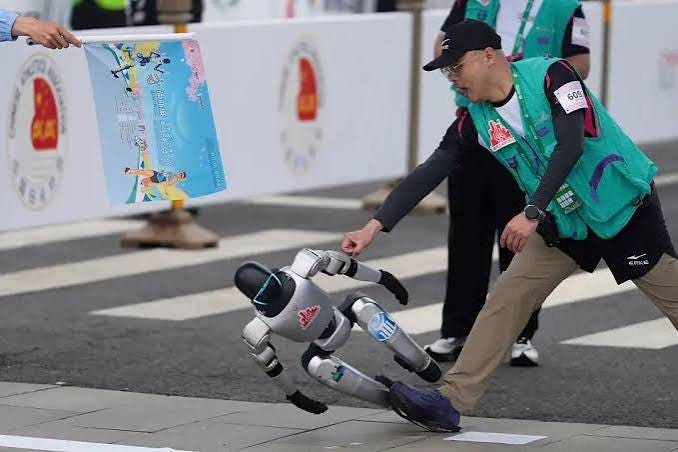
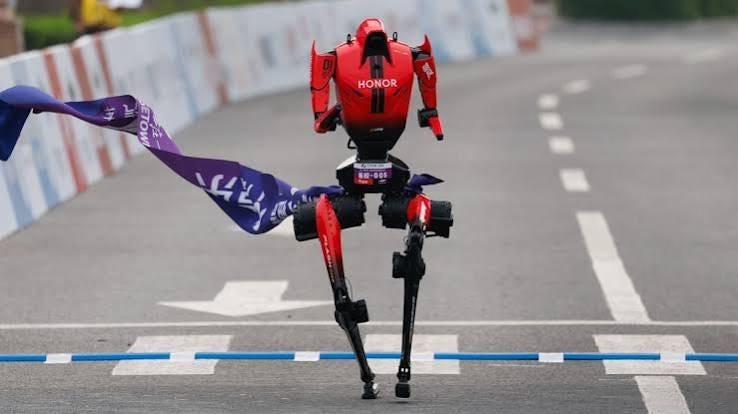
One year later, a robot called Lightning ran the same course in 50 minutes 26 seconds roughly 3.2 times faster. Built by smartphone maker Honor, it beat every one of the 12,000 human runners and broke the human half-marathon world record by nearly seven minutes.
The toy is now a business case. China already ships roughly 90% of the world’s humanoid robots, and Morgan Stanley expects its sales to more than double to about 28,000 units this year; more than any other economy. Everyone else is left fighting for scraps.
So the next time you want to know what will disrupt your industry or where to place your next bet, don’t study the giants. Study the toys. I laughed at one once. I have a Nokia badge to prove it.
Link: https://cdixon.org/2010/01/03/the-next-big-thing-will-start-out-looking-like-a-toy/
Options Are Not Optimal
The answer: Group #1.
The students who couldn’t change their minds kept finding more and more reasons to love the photo they took home. The ones who could swap? They kept reconsidering, second-guessing, wondering about the print they’d left behind.
Options are meant to make us happier. They rarely do.
In this wide-ranging essay; equal parts Roman history, options pricing, and neuroscience ; Joan Westenberg makes the case for closing doors for good.
Options were born in finance as a tool to hedge risk. To cap the losses that turn disastrous in capricious markets. But what’s a rational play on a trading floor doesn’t translate cleanly into a human life.
Commitment changes the odds. Almost everything we actually value; mastery, strong relationships, a sense of belonging; comes only from committing through the good times and the bad.
Here’s the mechanism. Once a decision is permanent, the brain starts rationalising it. Talking up the path you chose, discounting the one you didn’t.
Gilbert calls this the psychological immune system. It switches on when the door is truly shut. Leave the doors open, and the brain keeps recalculating whether to exercise the option. That background hum? We feel it as anxiety.
So choose a path. Cast the die. Burn the boats.
We might just be happier for it.
Link: How to Live Without Options - and Why It’s the Key to Happiness
A World Where Water Floats.
“Mom, is air denser than water?” My daughter looked up from her olympiad test last week.
“No. But imagine a world where it were.”
“Water would float above the air. We’d have seas instead of clouds.”
“And aeroplanes would swim instead of fly.”
For a while, we kept building out this strange world layer after layer.
What we were doing has a name: a counterfactual. In a world where X were different, Y would follow.
Then I found Colin McGinn’s short essay, simply titled Counterfactuals, and it blew my mind.
He runs the same game, only further and stranger.
A few of my favourites:
In a world with less gravity, the birds would be huge. In a world with more gravity, only insects would fly.
In a wetter world, we would have gills. In a drier world, life would begin on the land, if it begins at all.
And then he keeps going. Climbing out of biology and into philosophy, one “what if” at a time, until it makes your head spin.
Physical constraints shape life in ways we forget. Nudge a single variable, any one, and the fate of our species bends somewhere completely different.
We exist at all is improbable enough. That we evolved the strange gift of imagining how things might have gone otherwise is an even bigger miracle.
It’s the gift my daughter and I were using to find some comic relief in an otherwise gruelling exam prep.
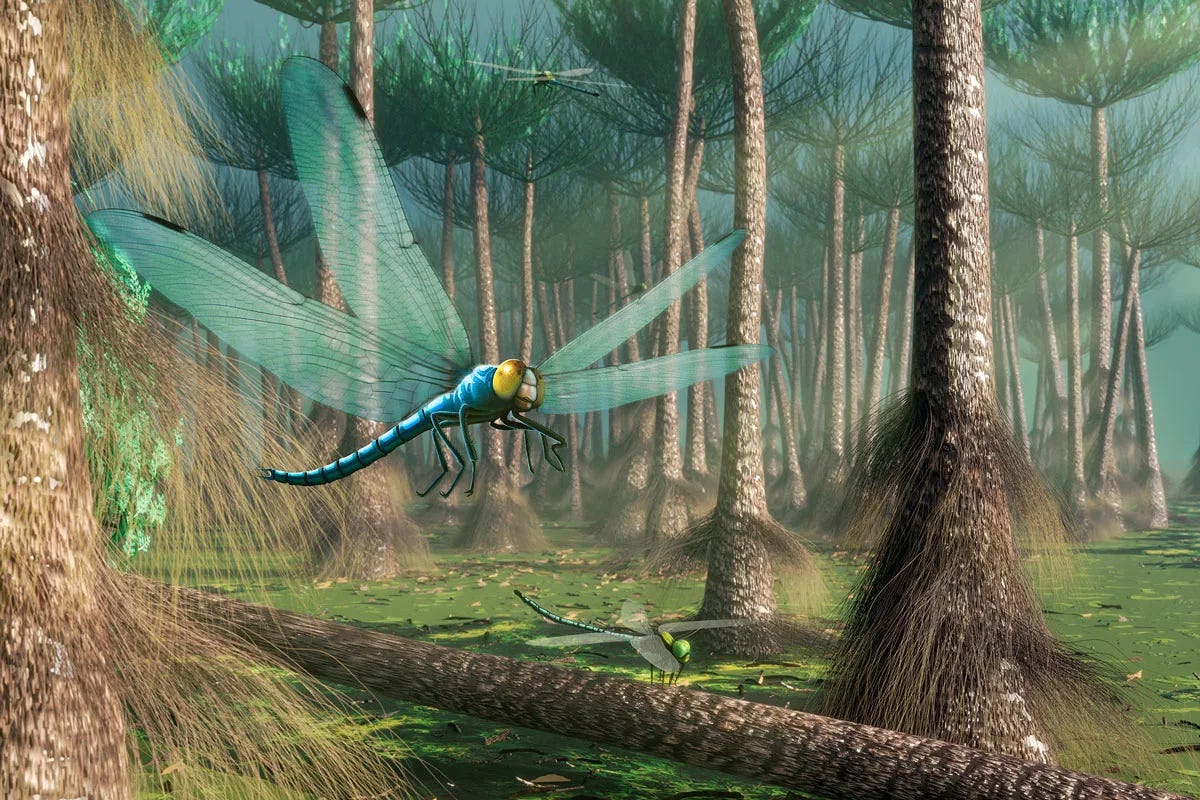
Link: https://colinmcginn.net/counterfactuals/
Wanted: People With Side Quests.
We are more than our jobs. And our side quests just might save us.
I’m looking for a few people to talk to about their side quests on my YouTube channel, Deep Fried Thoughts.
I want to hear about your side quests, the things you do outside of work, just because it brings you joy. Building a community. Learning something new. Making things. Starting a club. Tending to your plants. Writing a book.
It doesn’t have to be impressive or a money making machine. It just has to be the thing that makes you feel most alive.
The idea is simple: to inspire others to go and find a space of their own. To do something interesting, for no reason other than joy.
If that sounds like you; or someone you know; I’d love to hear about it. Fill out this short form (three quick questions, that’s it) and I’ll get back to you personally.
Conversations will be published on YouTube, Substack, and LinkedIn.
That’s all the brain snacks for this week.
Did anything I curated this week resonate? Please share it with me in the comments or reply to this email.
See you in your inbox next week.
Regards,
Garima