
Ryan Gosling's Hand, Second Chances & A Benjamin Button Career.
Now serving side dish of yummy snacks.

Travis Kalanick is back.
If the name rings a bell, it’s because he founded Uber and built it into a $70 billion giant. Then came a string of scandals, capped by an investigation into a workplace culture of sexual harassment and bullying. In 2017, he was ousted from the company he created.
Most careers don’t survive that. His did.
Kalanick recently emerged from 8 years of stealth mode with Atoms, a robotics company spanning food, mining, and transport. Operations across 30 countries and investors lining up.
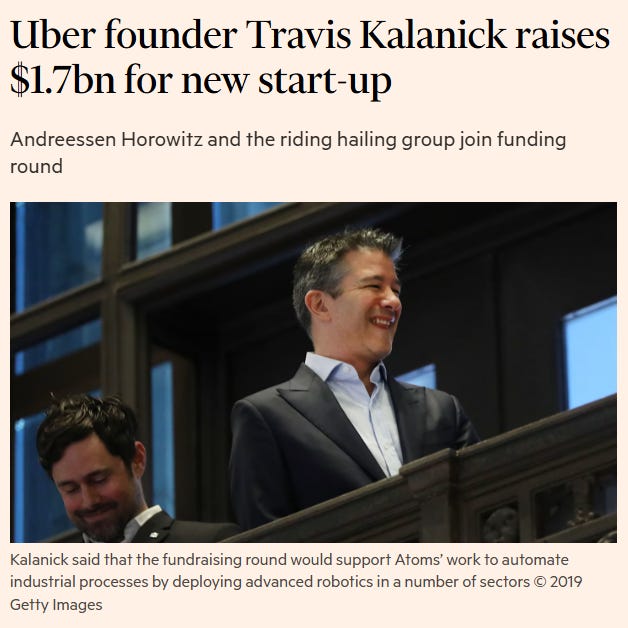
We love a redemption arc. But his comeback made me wonder: who gets a second chance? Hollywood, it turns out, has been keeping score.
The answer is in the first story this week. No spoilers.
Welcome to Deep Fried Thoughts. This is Garima.
Every week, I serve up a small plate of articles, video essays, and stories worth chewing on. If you like what’s cooking, consider subscribing.
On the menu today:
🗣️ The freedom to speak
🎬 Who gets a second chance in Hollywood
🏛️ The inner life of an architect
🕺 Ryan Gosling’s 10-year itch
Let’s dive right in.
Forgiven vs. Finished.
A man who fails in his debut in Hollywood has a 46% chance of getting another shot. A woman only 29%.
Film data analyst Stephen Follows, tracked 1,765 directors whose films cracked the top-100 US box office since 1980, checking who got to make a second big film.
The headline: 53% of men got a second top-grossing film. Only 40% of women did.
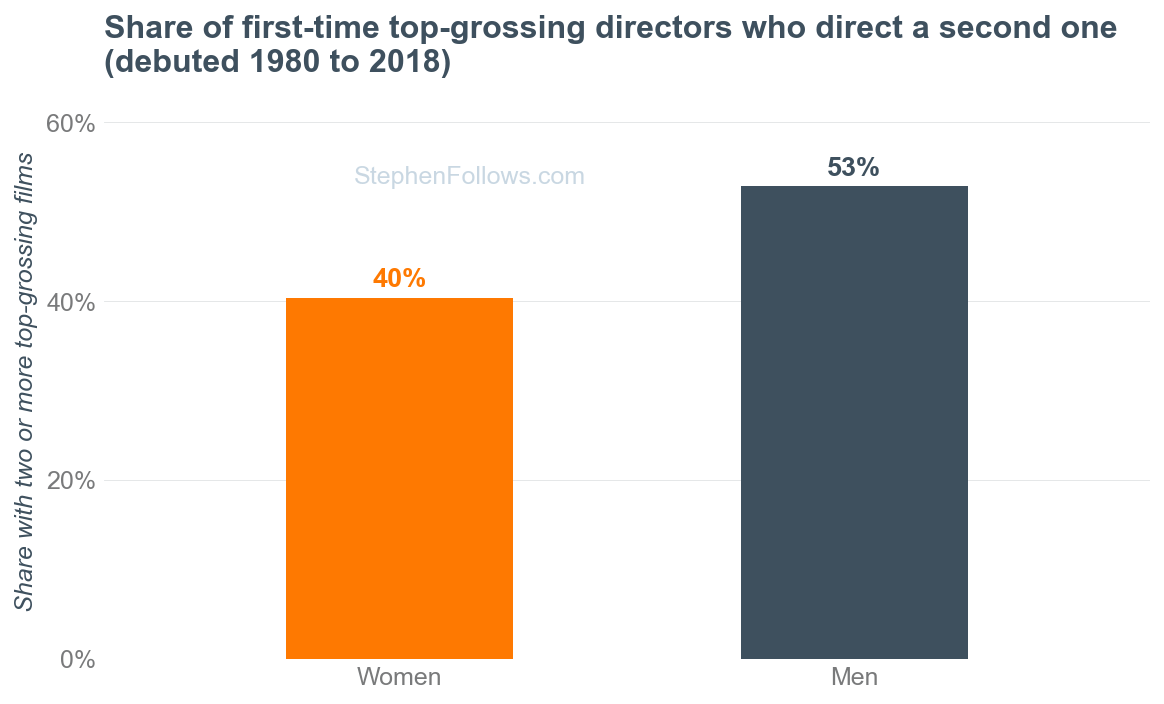
Things get even more interesting.
When success is undeniable, gender stops mattering. If the first movie is a top grosser (top 33 that year), women actually did slightly better: 76% got a second film versus 72% of men.
If the debut underperformed, 46% of men still got a second shot. Only 29% of women did.
If the debut lost money? 35% of men returned to the top 100. Just 25% of women.
A man is forgiven for a flop. A woman is not
And this isn’t just Hollywood. Stephen Follows shares:
Female surgeons lose more referrals after a patient dies. Female financial advisors are more likely to be fired after misconduct, and less likely to be rehired. Female founders whose startups fail struggle more to raise again.
A man’s failure is read as bad luck. A woman’s, as lack of ability.
None of this is a complaint. It’s a measurement. You can’t correct a bias you can’t see. Women don’t need advice to fail like a man; we need to be forgiven like one.
Link: Hollywood gives men second chances it doesn’t give women
Podcast Recommendation: How a Great Architect Thinks Ft Bjarke Ingels on Better in Person.
Canvases come in all sizes. For a YouTuber, it’s a 6-inch phone screen. For an author, 400-odd pages. For Christopher Nolan, an IMAX screen the height of a 7-story building. But for an architect the canvas is at a different scale - An airport, a concert hall, a 40-floor high-rise.
The canvas shapes the art. How many people can access it, how often, and at what cost.
I loved this conversation between Stephen Dubner (of Freakonomics fame) and the Danish architect Bjarke Ingels, on the debut episode of Dubner’s new show, Better in Person.
Architecture might be the most intimate art form of all. You don’t admire it from a distance. You walk through it, work in it, live inside it.
The conversation covers familiar creative territory. But it’s the alien parts of the profession that made me appreciate anyone who chooses architecture as a career.
First, royalties. Authors earn a cut of every book sold. Musicians, every stream. The cast of Friends reportedly still earns around $20 million a year each, for a show that ended in 2004. But architects design the building, build it, hand over the keys, and go hunting for the next gig.
Then there’s the age curve. A 25-year-old architect is underpaid and overworked, toiling for love of the craft. But experience compounds, the work gets easier, and there is no age ceiling. It’s a Benjamin Button profession.
My favourite line is a quote Ingels says he spotted on a T-shirt in Sweden:
If you think good architecture is expensive, try bad architecture.
I can’t help thinking that applies to far more professions than one.
Freedom of Speech vs. Freedom From Speech.
She typed her dissent, hit send, and left the group.
Last week, there was an awkward silence in one of the WhatsApp groups. Students in India are protesting after a paper leak. The protests began in Delhi. The anger is nationwide.

Some of that anger spilled into a group chat I’m part of. Two opposing views collided. One member shared her dissent and promptly exited the group.
To be clear, I was a spectator. I took no sides and fomented no fires. But watching someone leaving over listening left me speechless for a while.
Which is why Pamela Paresky’s essay, The Psychology of Free Speech, felt uncomfortably well-timed. The essay is built around Greg Lukianoff, a lawyer who has spent 25 years defending campus speech. His claim: the culture of silencing, cancelling, and walking away isn’t just a political problem. It’s a mental health problem. He calls it cognitive fragility.
Lukianoff is a survivor of suicidal depression. Cognitive Behavioural Therapy saved him. CBT works by confronting distorted thinking head-on. Free speech works exactly the same way. In CBT, exposure to what you fear reduces its emotional charge over time. Avoidance does the opposite. It builds anxiety, one dodged conversation at a time.
The same logic applies to ideas. We live in an uncertain, ambiguous world where no one has the full truth. Our opinions need constant calibration. And calibration is only possible by listening to people who disagree with us. You cannot change a mind you refuse to hear.
When we outshout, cancel, or exit on those who disagree, we’re signalling that our right to speak matters more than theirs. That’s disturbing.
The person who left that group chat felt relieved. I understand. But relief and safety are not the same thing. Every conversation we exit is a small practice run for a narrower mind. I’m trying to stay in the room. These days, it’s harder than it sounds.
Link: The Psychology of Free Speech | Psychology Today
Lukianoff’s TED talk:
The La La Hand
I started this newsletter with second chances. I’m ending with one. This one comes with a twist of a hand.
There are only two types of people in the world - those who love La La Land, and those who haven’t seen it yet. I’m proudly in the first camp. The songs. The romance. And that ending, which makes me cry EVERY SINGLE TIME.
Ten years on, the movie is returning to theaters this August. But the internet isn’t buzzing about the re-release. It’s buzzing about a hand.
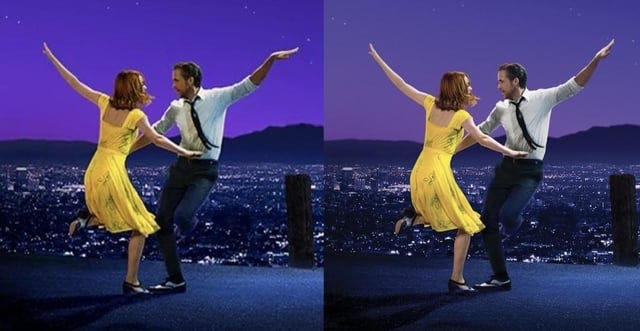
On the original poster, Gosling and Stone dance against the LA skyline, arms raised. Stone’s hand extends gracefully upward. Gosling’s is bent flat, like he’s patting an invisible shelf.
It was his own improvisation. Everyone on set told him it wasn’t cool. He was sure it was cooler.
He has regretted it ever since. He’s joked in interviews that the pose haunts him. He even gave it a name: the La La Hand.
Last week, the studio Lionsgate adressed it. The 10th-anniversary poster now carries the corrected hand. Yayy!?!!
I love that the tiny details still mattered to him 10 years later. And I love it even more as a masterclass in marketing: one small fix to an old poster, and a decade-old movie is trending everywhere. That’s promotion money can’t buy.
Now if you’ll excuse me, I have tickets to book and tears to schedule.
Link: The full story, with both posters
Link to the CNN Video.
That’s all for the week folks. I hope you enjoyed reading this week’s curation. If you did, consider leaving a like, comment or share the newsletter with someone who you suspect might enjoy it.
Over and out.
Garima